Veneers Before and After:
Real Smile Transformations Explained
See what dental veneers can genuinely change — from chipped edges to full smile makeovers — and understand exactly what the process looks like from start to finish.
Dental veneers are one of the most powerful tools in cosmetic dentistry — thin porcelain or composite shells that bond to the front surface of teeth, instantly transforming color, shape, length, and alignment. The before-and-after difference is often dramatic, and for millions of patients, it is genuinely life-changing.
Whether someone is dealing with deeply stained enamel, chipped front teeth, uneven spacing, or a smile that has always felt “off,” veneers offer a predictable, long-lasting solution. This guide walks through real patient outcomes, the types of veneers available, what the procedure actually involves, and the honest costs and trade-offs involved — so anyone considering treatment can make a fully informed decision.
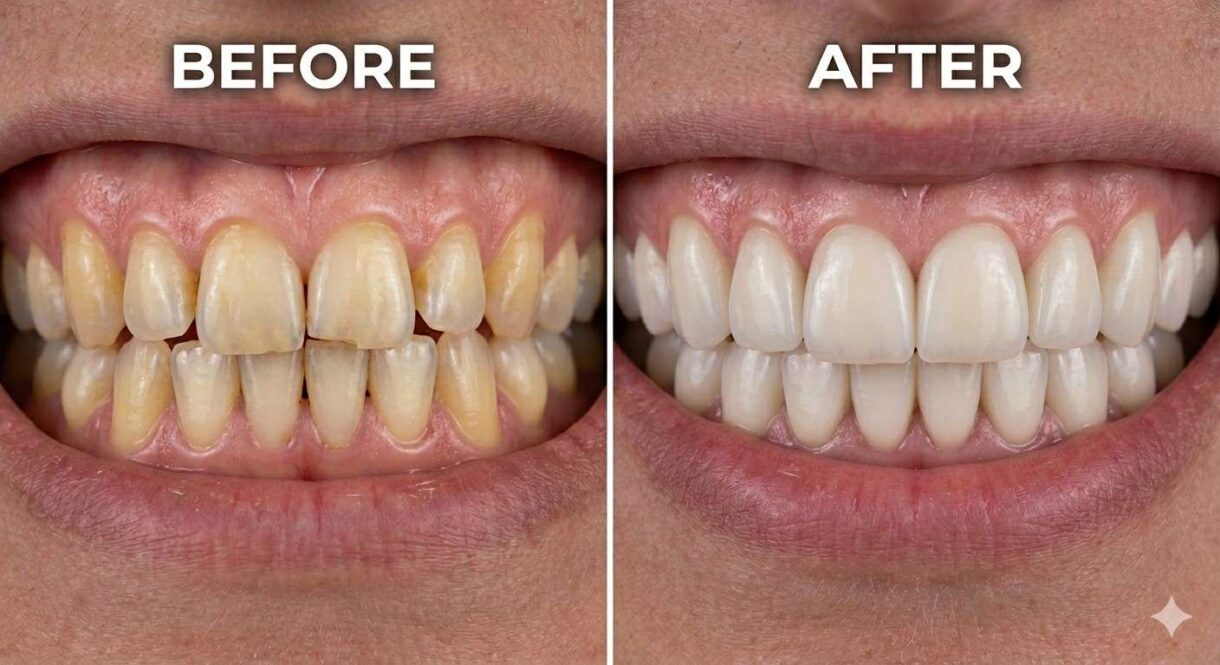
Full smile makeover with porcelain veneers — Brass Smile Dental patient result.
What Can Veneers Actually Fix? (And What They Can’t)
Before diving into the results, it helps to understand the real scope of what veneers do. They are a cosmetic restorative solution — not orthodontic, and not a replacement for structural or health-related dental work. With that framing, the list of problems they address is impressive.
Cosmetic Issues Veneers Effectively Treat
- Intrinsic staining — Deep discoloration from tetracycline antibiotics, fluorosis, or root canal treatment that whitening cannot touch.
- Chipped or worn edges — Teeth shortened by grinding (bruxism) or minor accidents regain natural length and symmetry.
- Uneven tooth size — Laterals and centrals that are too small or mismatched can be proportioned to complement the face.
- Mild spacing (diastemas) — Small gaps between front teeth, particularly the central incisors, close naturally with wider veneers.
- Slight misalignment — Veneers can visually correct mild crowding or rotation without braces, a technique sometimes called “instant orthodontics.”
- Rough or pitted enamel texture — Surface irregularities and enamel hypoplasia become invisible beneath the veneer shell.
What Veneers Are Not Designed For
- Severely crooked teeth or significant bite misalignment — these need orthodontics first.
- Teeth with extensive decay, cracking, or compromised structure — a crown is a better solution.
- Patients who grind heavily without a night guard — veneers can fracture under repeated excessive force.
- Active gum disease — periodontal health must be established before any cosmetic work begins.
Any reputable cosmetic dentist will complete a full oral health assessment before veneer placement. Placing veneers on an unhealthy foundation shortens their lifespan considerably — healthy gums and decay-free teeth are non-negotiable prerequisites.
Porcelain vs. Composite Veneers: Before and After Differences
Not all veneers are created equal, and the material chosen significantly affects the before-and-after result. Here is how the two main types compare.
| Feature | Porcelain Veneers | Composite Veneers |
|---|---|---|
| Material | Feldspathic porcelain or e.max ceramic | Tooth-coloured resin |
| Lifespan | 10–15+ years | 5–7 years |
| Appointments | 2–3 (lab-fabricated) | 1 (chairside, same day) |
| Enamel removal | 0.3–0.5 mm (minimal) | Little to none |
| Stain resistance | Excellent — highly glazed surface | Moderate — can discolour over time |
| Aesthetics | Superior — translucency mimics enamel | Good — slightly less natural lustre |
| Cost (per tooth) | $900 – $2,500 USD | $250 – $1,500 USD |
| Reversibility | Generally irreversible | More reversible / repairable |
For full smile makeovers — particularly those addressing severe staining or multiple alignment issues — porcelain veneers consistently produce more dramatic and longer-lasting before-and-after results. Composite remains an excellent choice for targeted repairs or patients who prefer a reversible, lower-cost first step.
Real Veneers Before and After: Patient Gallery
The following images are from actual patients treated at Brass Smile Dental. Each case illustrates a different clinical situation and veneer solution.
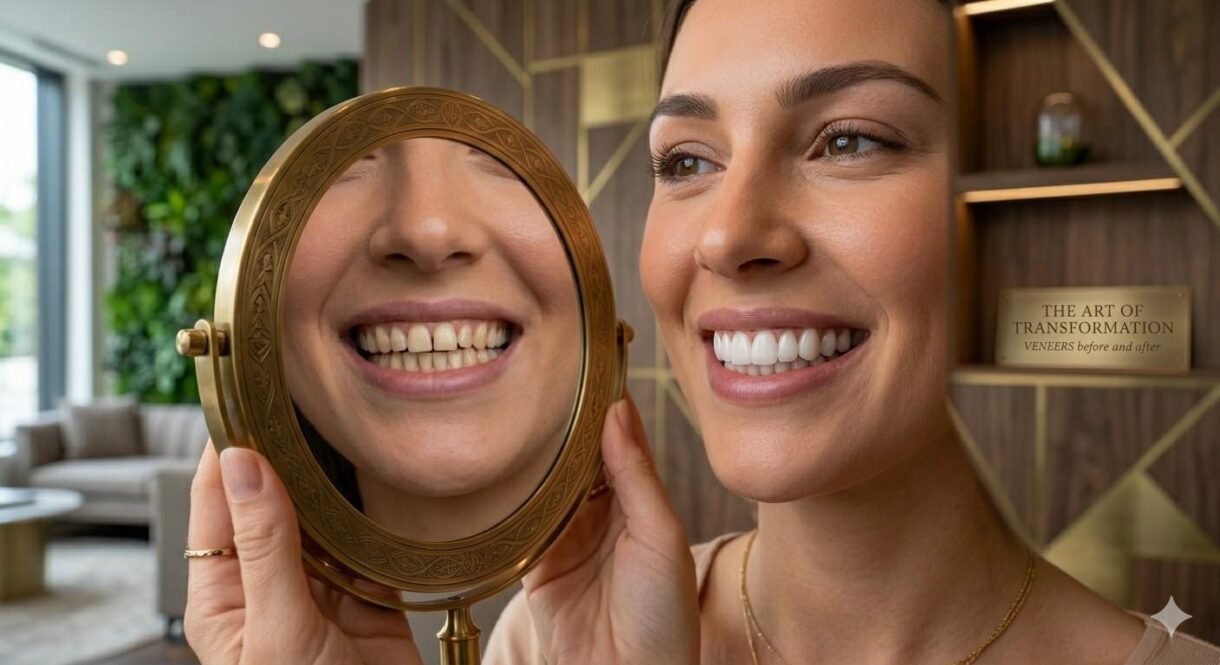
Case 1: Severe tetracycline staining treated with 10 upper and lower porcelain veneers.
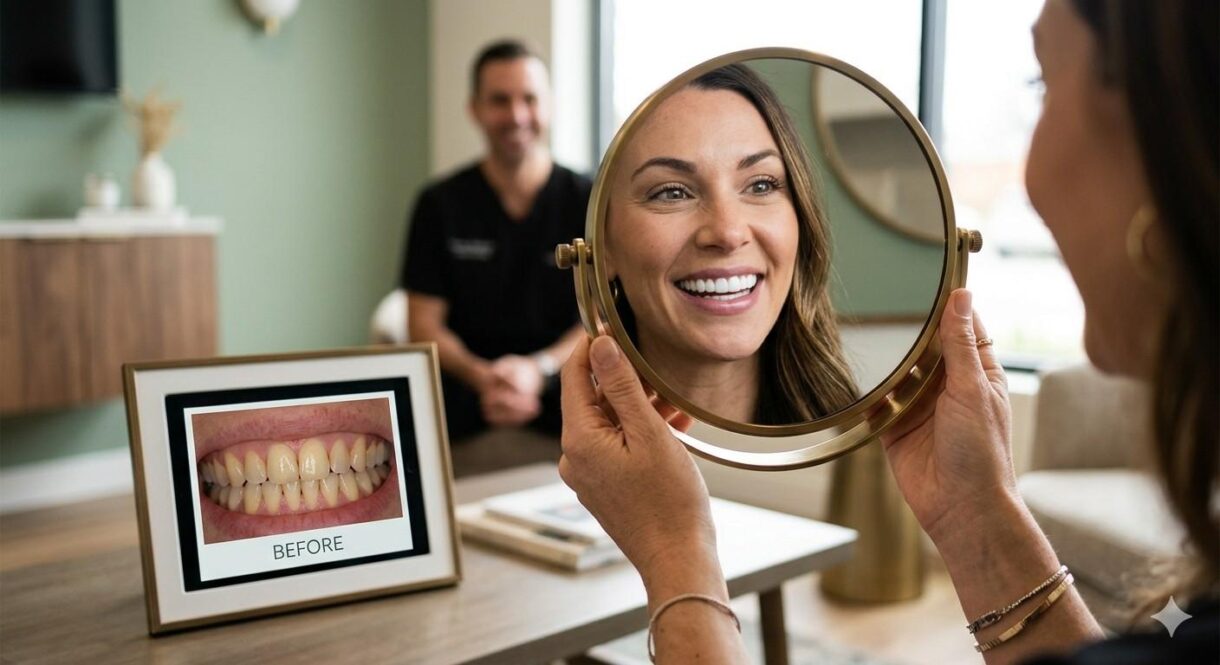
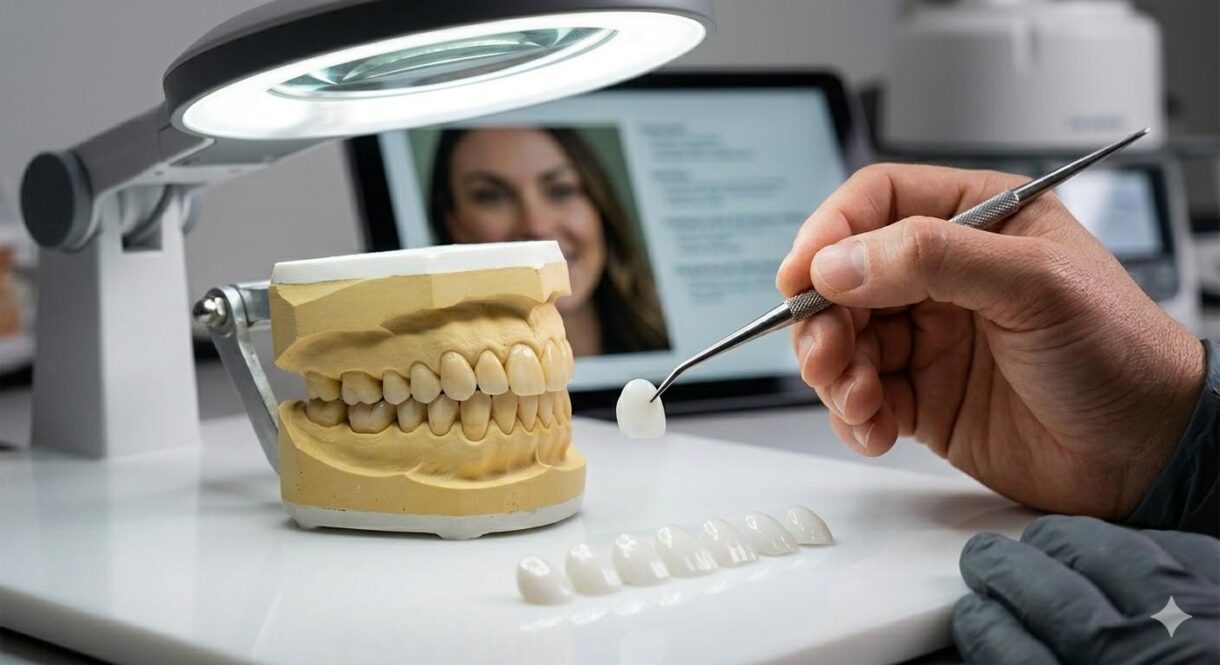
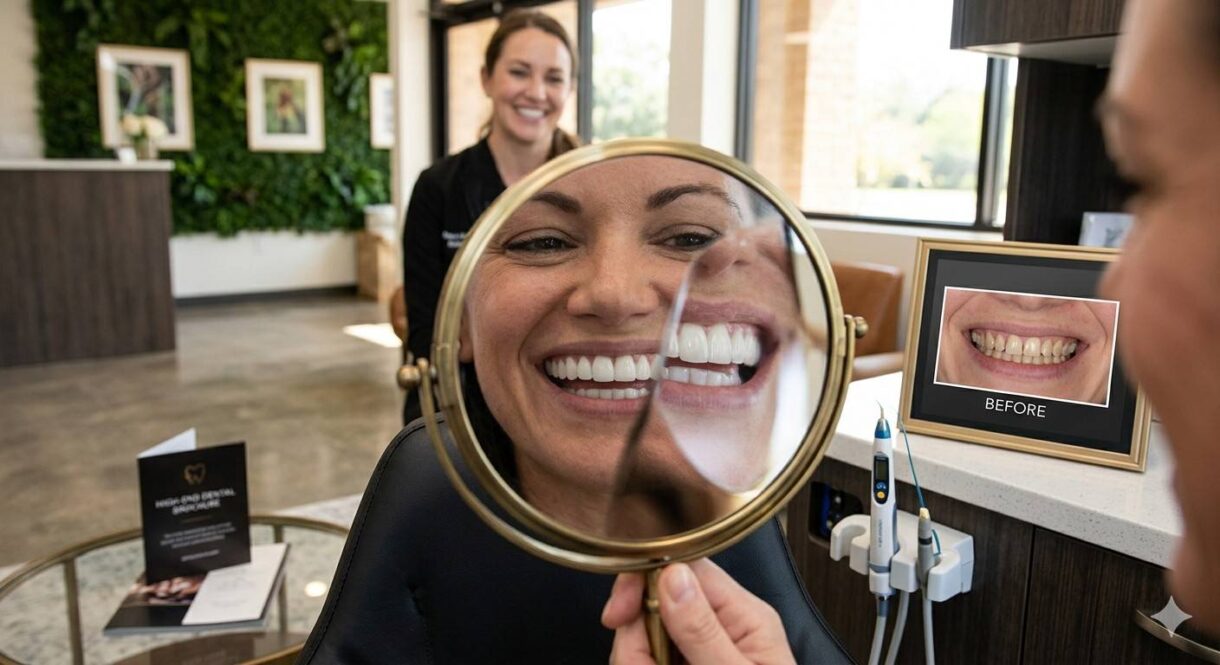
Case 4: Complete smile redesign — 12 upper porcelain veneers delivering a symmetrical, natural result.
“I had avoided smiling in photos for fifteen years. Six months after getting veneers, I genuinely cannot stop smiling — and I mean that literally. It sounds cliché but it changed how I carry myself.”
— Brass Smile Dental patient, age 38
The Veneer Procedure: Step-by-Step
Understanding what happens at each appointment removes a great deal of anxiety — and helps patients know exactly what to expect at their own before-and-after transformation journey.
Consultation and Treatment Planning
The first appointment covers a full oral health exam, digital X-rays, and often digital smile design software — where the dentist maps out a preview of the post-treatment result. This is when the patient and dentist agree on shade, shape, and the number of veneers needed. Many clinics now offer same-day mock-ups using temporary composite so patients can see and feel an approximation of the result before committing.
Tooth Preparation
For porcelain veneers, a thin layer of enamel — roughly the thickness of a contact lens — is removed from the front surface of each tooth. This ensures the veneer sits flush with the gumline and adjacent teeth rather than looking bulky. The preparation is done under local anesthetic and is considered irreversible, which is why it is so important to choose an experienced cosmetic dentist.
Temporary veneers are placed while the permanent restorations are being fabricated in a dental laboratory (typically 1–2 weeks).
Bonding Appointment
At the final appointment, the temporary veneers are removed, each tooth is etched with a mild acid solution to improve adhesion, and the permanent veneers are cemented in place with a light-cured dental adhesive. The dentist checks the bite, makes final micro-adjustments, and polishes the result. This appointment typically takes 1.5 to 3 hours depending on the number of veneers.
What Does It Feel Like After?
Some patients experience mild sensitivity to temperature for a few days following bonding — particularly if significant enamel removal was required. Over-the-counter sensitivity toothpaste manages this well. The veneers themselves feel entirely natural within a week as the brain adapts to the new surfaces.
How to Make Veneers Last: Long-Term Care
The before-and-after investment is significant — protecting it is straightforward with the right habits.
- Use a non-abrasive toothpaste. Whitening toothpastes with harsh abrasives can scratch the veneer surface over time, dulling the finish.
- Wear a night guard if you grind. Bruxism is the leading cause of veneer fracture. A custom-fitted occlusal guard protects the restorations during sleep.
- Avoid biting hard objects. Pen caps, ice, and fingernails can chip porcelain just as they chip natural enamel.
- Limit staining beverages. Coffee, red wine, and tea will not stain glazed porcelain, but they can discolour composite veneers and the bonding margins over time.
- Attend regular hygiene appointments. Professional cleaning every six months keeps gum tissue healthy around the veneer margins, preventing recession that can expose unveneered tooth structure.
Ask for an annual “veneer check” appointment. Catching a loose margin or micro-crack early prevents a full replacement and extends the life of the restoration considerably.
What Do Veneers Cost? A Realistic Price Guide
Cost is the most common question patients ask after viewing before-and-after galleries — and understandably so. The investment is real, but so is the outcome.
Typical Price Ranges (United States, 2026)
- Porcelain veneers: $900 – $2,500 per tooth
- E.max (lithium disilicate) veneers: $1,200 – $3,000 per tooth
- Composite veneers: $250 – $1,500 per tooth
- Full smile makeover (8–10 porcelain): $8,000 – $20,000+ total
Most dental insurance plans categorize veneers as a cosmetic procedure and do not cover them. However, many practices offer in-house financing, and third-party options like CareCredit make monthly payments accessible. Some patients also choose to veneer fewer teeth — focusing on the six most visible — to manage costs while still achieving a transformative result.
Are Veneers Worth the Investment?
Research consistently shows that smile confidence directly correlates with perceived social and professional outcomes. A 2023 survey by the American Academy of Cosmetic Dentistry found that 74% of adults believe an unattractive smile can harm career prospects, and 96% believe an attractive smile makes a person more appealing. For patients who have felt self-conscious about their teeth for years, the ROI of veneers often extends far beyond aesthetics.
Choosing the Right Cosmetic Dentist for Veneers
The before-and-after result depends as much on the dentist as it does on the material. Veneers are an art form — shade matching, shape design, and margin precision vary enormously between practitioners.
Questions to Ask Before Committing
- Can I see a portfolio of veneer cases you have personally completed?
- Do you use digital smile design software for treatment planning?
- Which laboratory fabricates your veneers — and can you tell me about their reputation?
- Will I receive temporary veneers while permanent ones are made?
- What is your policy if a veneer chips or debonds within the first year?
A dentist who welcomes all of these questions — and can answer them in detail with visual evidence — is demonstrating the transparency and experience a patient should look for in cosmetic work of this scale.
Frequently Asked Questions About Veneers
How long do dental veneers last?
Porcelain veneers typically last between 10 and 15 years, with many well-maintained cases lasting 20 years or more. Composite veneers average 5 to 7 years before replacement or refinishing is needed. Regular dental check-ups and good oral hygiene habits are the primary factors that extend lifespan beyond the average.
Do veneers look natural?
Modern porcelain veneers are custom-shaded and surface-textured to closely replicate the translucency and light-reflection properties of natural enamel. When crafted by a skilled ceramist and bonded correctly, they are virtually indistinguishable from surrounding natural teeth. The key is shade matching and proper margin blending at the gumline.
How many veneers do I need for a smile makeover?
Most smile makeovers involve between 6 and 10 veneers covering the teeth that show when a person smiles fully. Some patients achieve dramatic improvements with as few as 2 to 4 veneers targeting specific problem areas. The exact number is determined during consultation by mapping out the patient’s unique smile line and aesthetic goals.
Are dental veneers painful to get?
The preparation appointment is performed under local anesthetic, making it comfortable for the vast majority of patients. Mild temperature sensitivity for a few days following the final bonding appointment is common but resolves quickly. Long-term, veneers do not cause pain — properly bonded veneers feel entirely natural.
Can veneers fix crooked teeth without braces?
Veneers can effectively mask mild to moderate crowding, rotation, and uneven spacing by adjusting the perceived shape and alignment of each tooth. This approach, sometimes called “instant orthodontics,” works best for patients with minor alignment issues. Significant skeletal or bite discrepancies still require orthodontic treatment first for long-term stability and dental health.
The Bottom Line on Veneers Before and After
Dental veneers offer one of the most reliable, high-impact transformations in cosmetic dentistry. When the right candidate — healthy gums, realistic expectations, minimal structural damage — meets a skilled cosmetic dentist and a quality ceramic laboratory, the before-and-after results speak for themselves.
The process involves two to three appointments, a meaningful financial investment, and a permanent commitment to the alteration of natural tooth enamel. In return, patients receive a durable, natural-looking smile that can last well over a decade. For millions of people, that trade-off is among the best decisions they have ever made for their confidence and quality of life.
Anyone curious about whether they are a good candidate for veneers is encouraged to schedule a cosmetic consultation — ideally with a dentist who offers digital smile design, a substantial portfolio, and a transparent discussion of both the benefits and the limitations of the procedure.
Ready to See Your Before and After?
Book a complimentary cosmetic consultation at Brass Smile Dental and receive a personalized digital smile preview — at no charge.
Book Your Free Consultation