Chipped Tooth Crown: Repair Options, Costs & Exactly What to Do
A chipped tooth crown doesn’t always mean an expensive replacement. Learn when it can be repaired, how much it costs, and why the decision between a crown and a filling matters more than most patients realize.
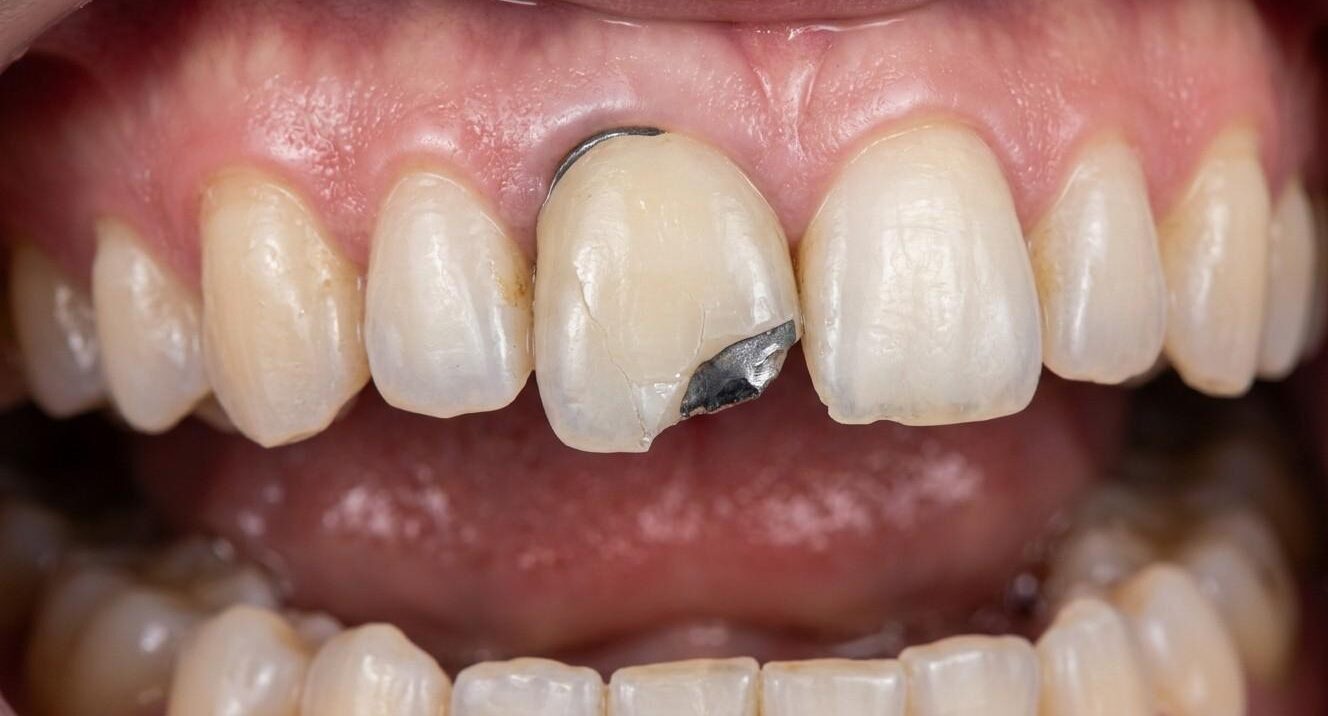
You’re biting into an apple or grinding through a stressful deadline — and suddenly something feels wrong. A piece of your dental crown has chipped away. It’s a surprisingly common scenario: studies suggest that porcelain-fused-to-metal crowns have a chip rate of roughly 10–15% over five years. But before the panic sets in, the good news is that a chipped tooth crown doesn’t always mean starting from scratch.
This guide walks through everything patients need to know — from identifying the severity of the chip to understanding the difference between a repair and a full replacement, and whether a chipped tooth crown or a filling is the smarter long-term choice for specific situations.
What Is a Chipped Tooth Crown — and Why Does It Happen?
A dental crown is a cap placed over a damaged or weakened tooth to restore its shape, function, and appearance. Crowns are typically made from porcelain, zirconia, porcelain-fused-to-metal (PFM), or full-metal alloys. Each material has different strengths — and different vulnerabilities.
When a crown develops a chip, crack, or fracture, the tooth underneath may become exposed to bacteria, temperature sensitivity, and bite pressure it wasn’t designed to handle alone. The severity of that chip determines the best course of action.
Can a Chipped Tooth Crown Be Repaired?
- Yes — small chips on porcelain crowns can often be smoothed or repaired with composite resin bonding in a single dental visit.
- Sometimes — moderate chips may be repairable depending on crown type, location, and structural integrity.
- No — large cracks, broken crowns, or those that have separated from the tooth typically require full replacement.
Common Causes of Chipped Tooth Crowns
Understanding why crowns chip helps prevent future damage. These are the most common culprits dentists encounter:
- Bruxism (teeth grinding): Nighttime grinding puts repetitive pressure on crowns, especially porcelain ones. This is one of the leading causes of premature crown failure.
- Biting hard foods: Chewing ice, hard candy, popcorn kernels, or crusty bread can fracture even high-quality crowns.
- Trauma or injury: A blow to the face during sports or an accident can crack or chip a crown instantly.
- Natural wear over time: Crowns are not permanent. Most have a lifespan of 10–15 years, after which the material begins to degrade.
- Poor bite alignment: If the bite is off — even slightly — certain teeth absorb more force than intended, accelerating crown damage.
- Using teeth as tools: Opening bottles or tearing packaging with the teeth is a fast route to crown damage.
Did You Know?
Porcelain-fused-to-metal (PFM) crowns are statistically more prone to chipping than full zirconia or full-metal crowns. The porcelain layer can separate from the underlying metal — a phenomenon called “porcelain delamination.”
What to Do Immediately After Chipping a Crown
The first 24 hours after noticing a chipped crown matter. Acting quickly can prevent further damage, infection, or unnecessary pain.
Call the dentist the same day
Even if there’s no pain, a chipped crown creates an entry point for bacteria. Most dental offices will fit in an emergency appointment — explain that a crown has chipped when calling.
Save any broken pieces
If a large fragment has broken off, rinse it with water and store it in a small container or sealed bag. In some cases, the dentist may be able to reattach it.
Avoid certain foods
Stay away from hard, crunchy, sticky, or extremely hot and cold foods until the crown is treated. These can worsen the chip or cause pain if the tooth underneath is exposed.
Use dental wax for sharp edges
If a sharp edge is cutting the tongue or cheek, dental wax (available at most pharmacies) can provide temporary protection until the appointment.
Manage pain with OTC medication
Ibuprofen or acetaminophen can help with discomfort. Avoid aspirin directly on the gum tissue, as this can cause chemical burns.
Dental Emergency? See a Dentist Today.
If there is sharp or throbbing pain, significant tooth sensitivity, visible darkening of the tooth, or the crown has completely fallen off — treat this as a dental emergency and seek care immediately. View emergency dental services →
Chipped Tooth Crown Repair Options: What Dentists Recommend
The right repair depends on the crown material, the size and location of the chip, and the condition of the underlying tooth. Dentists typically consider four main paths:
A tooth-colored resin is sculpted onto the chip, hardened with UV light, and polished smooth. Best for small chips on visible porcelain crowns.
For very minor chips with no structural concern, the dentist may simply smooth and polish the rough edge to prevent irritation and further fracture.
When a chip is large, the crown is structurally compromised, or the underlying tooth is damaged — a new crown is the safest long-term solution.
A temporary crown protects the tooth between visits while a permanent restoration is being custom-fabricated in a dental laboratory.
What About Same-Day Crown Technology?
Many modern dental practices now use CAD/CAM technology (like CEREC) to mill a new zirconia or ceramic crown in a single appointment. This eliminates the need for temporary crowns and multiple visits — though not every chip or patient situation qualifies for same-day restorations.
Chipped Tooth: Crown vs. Filling — Which Is the Right Choice?
One of the most common questions dentists hear: “Do I really need a crown, or can I just get a filling?” The honest answer is — it depends on several important clinical factors.
Here’s a clear breakdown of when each option makes sense:
| Factor | Dental Filling | Dental Crown |
|---|---|---|
| Size of chip/damage | Less than 25% of tooth structure affected | More than 25–30% of tooth affected |
| Best suited for | Minor chips on front teeth with stable enamel | Back molars, heavily damaged, or previously root-canaled teeth |
| Durability | 5–7 years average with proper care | 10–15+ years with proper care |
| Cost | $150–$400 (composite); $50–$150 (amalgam) | $1,000–$2,500 per crown |
| Protects full tooth | Partial only | Full 360° coverage |
| Good for grinding/bruxism | Not ideal | Yes, especially metal |
| Aesthetic on front teeth | Excellent (tooth-colored) | Excellent (porcelain/zirconia) |
| Same-day placement | Usually yes | With CEREC technology |
| Root canal needed? | Rarely | If nerve is involved |
When a Crown is the Smarter Choice
Dentists typically recommend a crown (rather than a filling) for a chipped tooth when:
- The tooth has already had a large filling — more than half the tooth is already restored material, making it structurally weak.
- A root canal has been performed — root-canaled teeth are brittle and prone to fracture without crown coverage.
- The tooth is a molar that handles heavy chewing forces daily.
- The patient has bruxism and needs maximum protection for the restored tooth.
- Multiple surfaces of the tooth are damaged, not just one small chip.
When a Filling May Suffice
- A front tooth has a small cosmetic chip affecting only the enamel edge.
- The chip is minor, the tooth structure is largely intact, and there’s no sensitivity or pain.
- Budget is a significant concern and the dentist confirms structural integrity is maintained.
The Filling-Over-Crown Trap
Choosing a filling when a crown is clinically indicated may seem like a cost saver in the short term. But if the weakened tooth fractures — especially below the gum line — the tooth may need to be extracted entirely. That outcome costs far more, both financially and functionally.
How Much Does Chipped Tooth Crown Repair Cost?
Cost is often the first concern patients raise. Here’s a realistic breakdown of what to expect in the U.S. in 2025:
Does Dental Insurance Cover a Chipped Crown?
Most dental insurance plans categorize crown repair and replacement as a major restorative procedure, typically covering 50–80% of costs after the deductible. Important points to know:
- Many plans have a waiting period of 12–24 months before crown replacement is covered — especially if the crown is less than 5 years old.
- Minor repairs like bonding or polishing may be covered under basic restorative benefits at a higher rate.
- Always get a pre-authorization from your insurance provider before proceeding with crown replacement to avoid billing surprises.
How to Prevent Chipping a Dental Crown
Once a crown is repaired or replaced, protecting it is the priority. These evidence-based habits significantly extend crown lifespan:
- Wear a night guard if diagnosed with bruxism. A custom-fitted mouthguard redistributes grinding forces away from crowns and natural teeth alike.
- Avoid chewing ice, hard candy, and crusty bread with crowned teeth — particularly porcelain ones.
- Wear a sports mouthguard during any contact activity where a blow to the face is possible.
- Attend regular dental checkups every 6 months. Dentists can spot early signs of crown wear, bite issues, or structural stress before they cause a chip.
- Avoid using teeth as tools — no bottle-opening, packaging-tearing, or thread-biting.
- Ask about crown material upgrades if an old porcelain crown needs replacement — zirconia crowns are far more fracture-resistant.
Pro Tip from Brass Smile Dental
Patients who commit to twice-daily brushing, daily flossing, and 6-month checkups statistically extend their crown lifespan by 3–5 years compared to those who skip professional cleanings. Good oral hygiene protects the margin — the seam between crown and tooth — where bacteria can silently cause decay under the crown.
Frequently Asked Questions
These are the most common questions patients ask about chipped tooth crowns — drawn from real Google “People Also Ask” searches.
The Bottom Line on Chipped Tooth Crowns
A chipped tooth crown is one of the more manageable dental problems — but only when it’s addressed promptly. The severity of the chip, the material of the crown, and the health of the underlying tooth all determine whether a quick repair or a full replacement is the right move.
For small chips on porcelain crowns, same-visit composite bonding is often all that’s needed. For larger fractures, structural damage, or repeatedly failing restorations, a new crown — ideally in a more durable material like zirconia — delivers the best long-term outcome.
The crown vs. filling debate ultimately comes down to a simple clinical principle: use the solution that provides the most protection the tooth actually needs — not the cheapest patch for today. A dentist who has seen the X-rays and examined the tooth is always the best guide.
If a crown has recently chipped, don’t wait to see if it gets worse. Reach out to Brass Smile Dental to schedule an evaluation — and use the free AI Smile Analysis Tool for a fast, preliminary look at what the smile might need.